

A TPU layflat hose is expected to work under demanding conditions. It may carry water over long distances, transfer frac fluid at high pressure, or support mining dewatering projects where downtime is expensive. Whether the hose is used in industrial operations, agricultural irrigation, shale gas extraction, or potable water delivery, its performance depends on manufacturing quality and thorough testing.
Quality inspection is more than checking the hose appearance. It includes pressure testing, abrasion testing, strength evaluation, and aging tests that measure how the hose performs throughout its service life.
This guide explains the most common TPU layflat hose testing standards, what each test measures, and why these tests help users choose a reliable product.
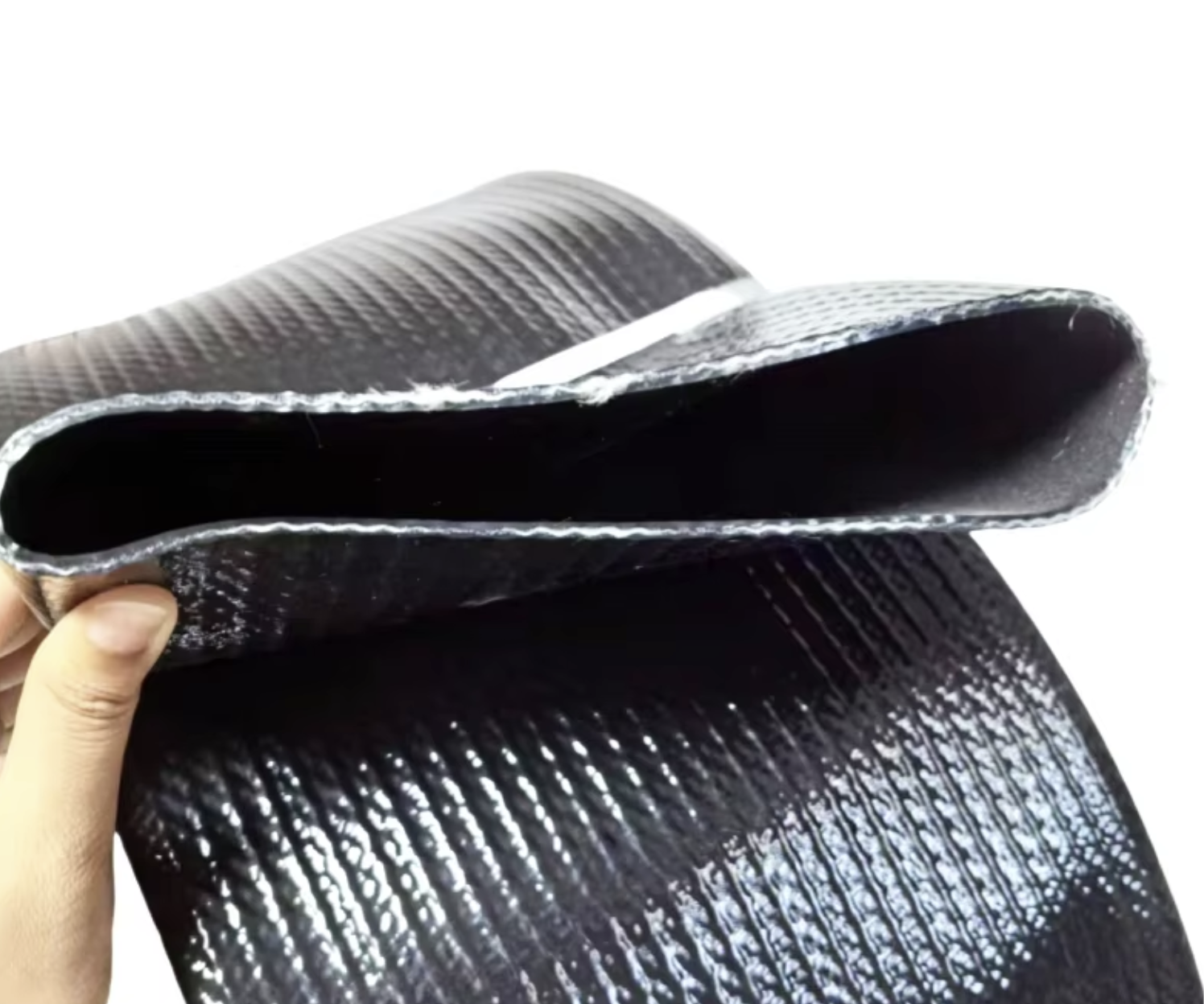
A layflat hose often operates in difficult environments.
It may be dragged across rocks, exposed to sunlight, transported over long distances, or repeatedly rolled and unrolled. Without proper testing, small manufacturing defects may become leaks or failures during operation.
A complete quality inspection helps manufacturers verify:
Reliable testing also ensures every production batch meets the same quality standard before supply to customers.
Modern TPU layflat hoses combine several materials into one flexible product.
Typical construction includes:
The extruded TPU layer creates a smooth flow path for water or other fluids.
The woven polyester reinforcement provides strength while keeping the hose lightweight and flexible.
Compared with rubber hoses, TPU hoses are easier to transport, easier to store, and suitable for large diameter and high-flow applications.
The Hydrostatic Pressure Test verifies whether the hose can safely operate at its rated working pressure.
The hose is filled completely with water.
Pressure is gradually increased until the specified working pressure is reached.
The pressure is maintained for a defined period while inspectors check for:
Because water is nearly incompressible, hydrostatic testing provides a safe method for evaluating pressure performance.
This test confirms the hose is suitable for:
The Burst Pressure Test measures the maximum pressure the hose can withstand before failure.
Unlike the hydrostatic pressure test, this test continues increasing pressure until the hose bursts.
Engineers record:
A quality TPU layflat hose should exceed its rated working pressure by an appropriate safety margin.
For high pressure applications such as hydraulic fracturing and shale gas extraction, burst pressure testing is performed on every production batch or according to strict sampling procedures.
Burst pressure testing is especially important for:
The Abrasion Test measures how well the polyurethane cover resists wear.
Since layflat hoses are often dragged across rough ground, abrasion resistance directly affects service life.
The hose surface repeatedly contacts an abrasive material under controlled pressure.
After a specified number of cycles, inspectors evaluate:
High-quality polyurethane usually performs much better than conventional PVC in abrasion testing.
Applications that benefit include:
The Tensile Strength Test measures the strength of both the hose material and its reinforcement.
Testing may include:
Good tensile strength helps prevent hose stretching, deformation, or failure under pressure.
It also improves performance during repeated deployment and transport.
The Aging Test evaluates how the hose performs after long-term environmental exposure.
Samples may be placed in controlled conditions including:
After aging, the hose is tested again for:
This helps estimate long-term performance in outdoor environments.
Besides the major laboratory tests, manufacturers may perform additional inspections.
The hose is bent repeatedly to verify flexibility during installation and storage.
This is especially useful for:
Every production run is checked for dimensional accuracy.
Inspectors measure:
Accurate dimensions ensure proper coupling installation and stable pressure performance.
The woven polyester reinforcement is inspected for:
Poor reinforcement quality often causes early hose failure even if the TPU material itself is excellent.
Visual inspection identifies manufacturing defects including:
Although appearance alone does not determine performance, it often reflects production quality.
Different industries require different performance priorities.
| Application | Main Testing Focus |
|---|---|
| Agricultural irrigation | Hydrostatic Pressure Test, flexibility, lightweight design |
| Potable Water systems | Material safety, Hydrostatic Pressure Test, cleanliness |
| Industrial fluid transfer | Burst Pressure Test, abrasion resistance |
| Mining dewatering | Abrasion Test, Tensile Strength Test |
| Fracturing and frac water transfer | Burst Pressure Test, reinforcement strength |
| Shale gas extraction | High pressure performance, Aging Test |
| Large diameter delivery | Pressure stability, reinforcement inspection |
Quality begins long before the hose reaches the testing laboratory.
Reliable manufacturers monitor every production stage.
Typical inspection points include:
Consistent manufacturing reduces variation between production batches and improves overall product reliability.
When comparing suppliers, ask for more than the pressure rating.
Request test reports covering:
Also verify:
Manufacturers that provide complete testing documentation usually offer greater consistency across long-term supply.
| Test | Purpose | Measures |
|---|---|---|
| Hydrostatic Pressure Test | Working pressure | Leakage |
| Burst Pressure Test | Maximum pressure | Safety margin |
| Abrasion Test | Wear resistance | Cover durability |
| Tensile Strength Test | Reinforcement strength | Mechanical strength |
| Aging Test | Long-term performance | Material durability |
A Hydrostatic Pressure Test confirms the hose can safely operate at its rated working pressure. A Burst Pressure Test increases pressure until the hose fails, measuring its maximum pressure capacity and safety margin.
Layflat hoses are frequently pulled across soil, gravel, rocks, and concrete. High abrasion resistance helps reduce surface wear and extends hose service life.
Polyurethane provides excellent wear resistance, flexibility, low weight, and strong pressure performance. It is widely used in industrial, agricultural, mining, and frac water transfer applications.
Woven polyester reinforcement provides high tensile strength while keeping the hose lightweight and flexible. It helps the hose withstand high internal pressure without excessive expansion.
High-pressure TPU layflat hoses are commonly used for hydraulic fracturing, shale gas extraction, mining dewatering, industrial water transfer, emergency water delivery, large diameter pumping systems, and long-distance fluid transport.
A TPU layflat hose should be evaluated by measurable performance rather than appearance alone. Standard quality inspection procedures—including the Hydrostatic Pressure Test, Burst Pressure Test, Abrasion Test, Tensile Strength Test, and Aging Test—provide valuable information about pressure capacity, wear resistance, durability, and long-term reliability.
Whether the hose is used for irrigation, potable water delivery, industrial fluid transfer, mining dewatering, or frac operations, selecting a product backed by documented testing helps reduce maintenance, improve operational safety, and support dependable performance throughout its service life.
© 2026 Yoonad Hose | Yoonad Group | All right reserved Created by WIGOR