

A TPU layflat hose is a flexible transfer hose made with a TPU tube and reinforcement, allowing the hose to flatten when it is not under pressure.
TPU, or thermoplastic polyurethane, is a flexible material known for its high wear resistance and good mechanical strength. A typical TPU layflat construction includes an inner TPU layer, reinforcement, and an outer cover made from TPU or another suitable protective material.
The lay-flat design makes the hose easier to transport, roll, store, and deploy than rigid piping. This is especially useful at mining sites where water lines may need to be installed, moved, or extended as operations change.
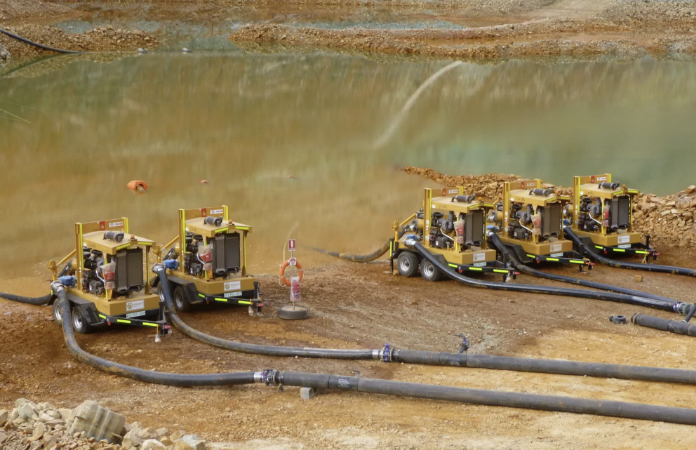
Mining water systems often operate in rough outdoor conditions. Hoses may run across rock, gravel, soil, concrete, or other abrasive surfaces. They can also be exposed to sunlight, temperature changes, equipment movement, and repeated installation.
A properly selected TPU layflat hose can provide several practical benefits:
Mine dewatering is one of the main applications for TPU lay flat hoses. Water may need to be moved from underground workings, open pits, sumps, or drainage areas to a discharge point.
A flexible hose allows the water line to follow changing site conditions. Long hose sections can also reduce the number of connections required along a temporary water route.
Mining operations may need to move water over long distances between reservoirs, pumps, processing areas, and working zones.
A TPU layflat hose can be supplied in long continuous lengths. This helps reduce connection points and can make deployment more efficient.
Water is often used for dust control around haul roads, stockpiles, crushing areas, and other mining operations.
A TPU water transfer hose can connect pumps and water sources to sprinklers, spray systems, or mobile dust-suppression equipment.
Mining facilities use water in processing and material-handling operations. Depending on the fluid and system requirements, TPU lay flat hoses may be used for certain process-water and tailings-related transfer duties.
The actual hose construction should be selected according to the fluid, temperature, pressure, solids content, and site conditions.
Open-pit mines often require temporary or semi-permanent water lines. These lines may need to be relocated as the excavation area changes.
Flexible lay flat hoses can be rolled, moved, and redeployed more easily than rigid pipe, making them suitable for changing work areas.
Underground mining requires careful consideration of available space, equipment movement, pressure, and hose routing.
The flexible construction of lay flat hoses allows water lines to be routed through areas where rigid piping may be difficult to install or relocate.
The construction of a mining TPU hose depends on the required pressure, diameter, length, and application.
The inner tube provides the main fluid-contact surface. TPU is commonly selected because it offers good mechanical strength and abrasion resistance.
For water transfer applications involving suspended particles or rough service conditions, material selection should consider the expected wear rate and fluid characteristics.
The reinforcement provides the hose with its pressure-bearing structure.
High-strength textile reinforcement can be used to support the hose under pressure while maintaining flexibility. The reinforcement design affects the hose's working pressure, flexibility, elongation, and overall service performance.
The outer cover protects the reinforcement and inner tube from external wear and handling damage.
For mining applications, the outer layer should be suitable for contact with abrasive surfaces, equipment, and outdoor conditions.
Different lay flat hoses use different materials, including PVC, rubber, TPU, and other thermoplastic materials. The best choice depends on the operating conditions.
| Feature | TPU Layflat Hose | Other Lay Flat Hoses |
|---|---|---|
| Material | Thermoplastic polyurethane | PVC, rubber, other materials |
| Flexibility | High | Depends on construction |
| Abrasion resistance | Very good | Depends on material |
| Working pressure | Available in high-pressure designs | Varies by product |
| Water transfer | Excellent for suitable designs | Common |
| Outdoor applications | Suitable with proper UV/weather design | Depends on material |
| Long-distance transfer | Suitable | Depends on hose specification |
| Handling | Flexible and rollable | Depends on construction |
For mining, selection should be based on actual pressure, diameter, fluid, temperature, abrasion exposure, installation method, and expected service life rather than material name alone.
Working pressure is the maximum pressure at which a hose is designed to operate continuously under specified conditions.
A high pressure layflat hose should be selected with sufficient pressure capacity for the complete pumping system. The selection should account for:
The hose working pressure should not be confused with burst pressure. A hose should be operated within its specified working pressure range.
For mining projects, the manufacturer should provide pressure ratings and test data for the actual hose construction being supplied.
Mining sites can be highly abrasive. A hose may be dragged over rock, gravel, concrete, or other rough surfaces during installation and relocation.
Abrasion resistance is therefore an important factor when selecting a mining hose.
TPU has good resistance to mechanical wear, making it suitable for applications where the hose is exposed to repeated handling and contact with rough surfaces.
However, abrasion performance depends on the complete hose structure, including the TPU grade, wall thickness, reinforcement, outer cover, and manufacturing process.
For severe applications, the hose should be evaluated against actual site conditions rather than relying only on a general material description.
Mining hoses are commonly installed outdoors. They may be exposed to:
The hose specification should match the expected environmental conditions.
When selecting a tpu hose for outdoor water transfer, ask the manufacturer about temperature range, UV resistance, storage requirements, pressure performance, and recommended installation practices.
Choosing the right hose starts with the actual operating conditions.
The hose diameter affects flow rate, pressure loss, pump requirements, and overall system performance.
Common mining water-transfer systems may use large-diameter lay flat hoses when high flow rates are required.
Confirm the maximum operating pressure of the system and select a hose with an appropriate working pressure rating.
For pump-driven systems, pressure surges should also be considered.
Longer hose sections can simplify installation and reduce connection points. However, transportation, handling, storage, and site layout should also be considered.
If the hose will be dragged across rock or other rough surfaces, prioritize a construction designed for high abrasion resistance.
TPU performance varies with formulation and construction. Confirm that the hose's operating temperature range matches the mining environment.
Couplings must match the hose diameter, working pressure, pump connection, and installation method.
A high-performance hose cannot compensate for an unsuitable coupling system.
Consider how often the hose will be moved, how it will be stored, and whether the line will be exposed to vehicles or heavy equipment.
Proper routing and handling can extend hose service life.
Long-distance water transfer is common in mining. Water may need to travel from a source to a remote work area or from a mine dewatering point to a discharge location.
A flexible transfer hose can provide an alternative to rigid pipelines in temporary or changing installations.
The main factors to review include:
For very long systems, hydraulic calculations should be completed before selecting the final hose size and pump configuration.
Correct handling helps protect a TPU layflat hose from unnecessary damage.
Do not drag the hose across sharp metal edges, broken rock, or other objects that may cut the outer cover.
Where possible, route hoses away from haul trucks, excavators, loaders, and other mobile equipment.
Follow the manufacturer's recommended minimum bend radius and avoid tight bends near couplings.
Pump start-up and shutdown should be managed to reduce sudden pressure changes.
Before installation, inspect the hose for cuts, abrasion, exposed reinforcement, damaged couplings, or other visible defects.
For mining projects, the manufacturer should be able to provide more than a basic hose specification.
A reliable supplier should be able to provide:
Project buyers should also confirm whether the manufacturer's testing and quality system meets the requirements of the intended mining project.
The final specification should be based on the actual project requirements. A typical specification sheet may include:
| Specification | Typical Selection Information |
|---|---|
| Hose type | TPU layflat hose |
| Material | Thermoplastic polyurethane |
| Application | Mining water transfer and dewatering |
| Diameter | Selected according to required flow |
| Length | Selected according to site layout |
| Working pressure | Selected according to pump and system pressure |
| Reinforcement | High-strength textile reinforcement |
| Outer cover | TPU or application-specific protective layer |
| Fluid | Water or specified compatible fluid |
| Installation | Temporary or semi-permanent |
| Environment | Indoor or outdoor applications |
| Performance focus | Flexibility, pressure capacity, abrasion resistance |
The values above are selection categories rather than a universal specification. The actual hose data should always be confirmed with the manufacturer.
A TPU layflat hose is commonly used for mine dewatering, water transfer, dust suppression, and other suitable fluid-transfer applications. Its flexible construction makes it useful where hoses must be moved or installed over changing terrain.
Yes. High-pressure TPU layflat hoses are available for demanding water-transfer systems. The correct model must be selected according to the required working pressure, pump conditions, hose diameter, and pressure surges.
Thermoplastic polyurethane offers good mechanical strength, flexibility, and abrasion resistance. These properties can be useful where hoses face repeated handling and rough ground conditions.
TPU and PVC have different mechanical and performance characteristics. TPU is often selected where greater abrasion resistance, flexibility, and demanding mechanical performance are required. The best material depends on pressure, temperature, fluid, installation, and expected service conditions.
Yes. TPU lay flat hoses can be designed for outdoor applications. The selected product should have an environmental specification suitable for sunlight, temperature changes, moisture, and the expected site conditions.
Service life depends on working pressure, abrasion, temperature, UV exposure, fluid characteristics, bending, dragging, storage, and handling. Correct installation and regular inspection can help reduce premature damage.
Start with the maximum normal operating pressure and consider pressure surges, pump conditions, elevation, and temperature. Select a hose with a working pressure rating appropriate for the complete system.
Yes. Long-length TPU lay flat hoses can be used for many long-distance water-transfer systems. Hose diameter, flow rate, pump pressure, elevation, friction loss, and connection design should be evaluated before installation.
A TPU layflat hose for mining combines flexible handling with strong mechanical performance for demanding water-transfer applications. Its thermoplastic polyurethane construction can provide good abrasion resistance, while reinforced designs can support high working pressures.
For mine dewatering, long-distance water transfer, dust suppression, and other outdoor applications, the right hose should be selected according to pressure, flow, diameter, temperature, ground conditions, and installation method.
The most reliable approach is to match the TPU hose construction to the actual mining environment and obtain verified technical data from the manufacturer before placing an order.
© 2026 Yoonad Hose | Yoonad Group | All right reserved Created by WIGOR